Who Actually Feels at Home in Snowflake, Arizona?
Will Snowflake’s specific community character, rural self-selection, social fabric, quietness, and expectations fit the buyer’s real life?
Snowflake draws buyers who want something specific: quiet, space, a faith-influenced close-knit community, and a high-desert setting that doesn't try to be Pinetop or Show Low. Here's what shapes daily life there — and who tends to thrive.
Snowflake is one of those towns that buyers either understand immediately or find puzzling. Compared with Show Low's service depth, Pinetop's cabin culture, and Lakeside's lake-and-forest setting, Snowflake looks like the less obvious choice on paper. But buyers who end up here tend to have come on purpose, drawn by something specific about the town's character rather than settling for it.
The question worth asking before you start a Snowflake home search isn't whether the town is good or bad. It's whether what Snowflake is appeals to you more than what its neighbors are.
Quick Answer
Snowflake works best for buyers who want a quiet, grounded, faith-influenced small-town environment, are comfortable with a rural pace, and prefer community rootedness over resort amenities or forested mountain scenery. It tends to disappoint buyers who arrive expecting a typical White Mountains experience and find something more high-desert, more culturally specific, and more self-contained than they pictured.
Why Some Buyers Choose Snowflake on Purpose
Snowflake has a strong local identity, and for buyers who connect with it, that's the point. The town isn't trying to be a second-home destination or a service hub. It functions as a real community where people know each other, events are locally organized, and daily life moves at a pace that feels intentional rather than slow.
Buyers who find this appealing tend to fall into a few patterns. Some are coming from larger Arizona metros and want distance from suburban density without abandoning everyday basics. Some are drawn primarily by price — Snowflake's entry point is meaningfully lower than Show Low or Pinetop — and find the community a genuine fit rather than a compromise. Some are retiring and want a stable, quiet environment where local infrastructure handles daily needs without much friction. And some are remote workers or self-employed buyers who bring their income with them and have no particular stake in Snowflake's limited local job market.
What most of these buyers share is that they arrived with accurate expectations. They knew Snowflake was high desert rather than pine forest. They knew the service base was smaller than Show Low. They knew the town had a distinct cultural character. And they decided those were acceptable tradeoffs — or actively preferred them.
How Snowflake's LDS History Still Shapes Local Character
Snowflake was founded in 1878 by Mormon pioneers sent by Brigham Young to establish communities across the Southwest. The town was named for two of its early leaders: apostle Erastus Snow and land agent William Jordan Flake. That origin isn't historical footnote — it's woven into how the community operates today.
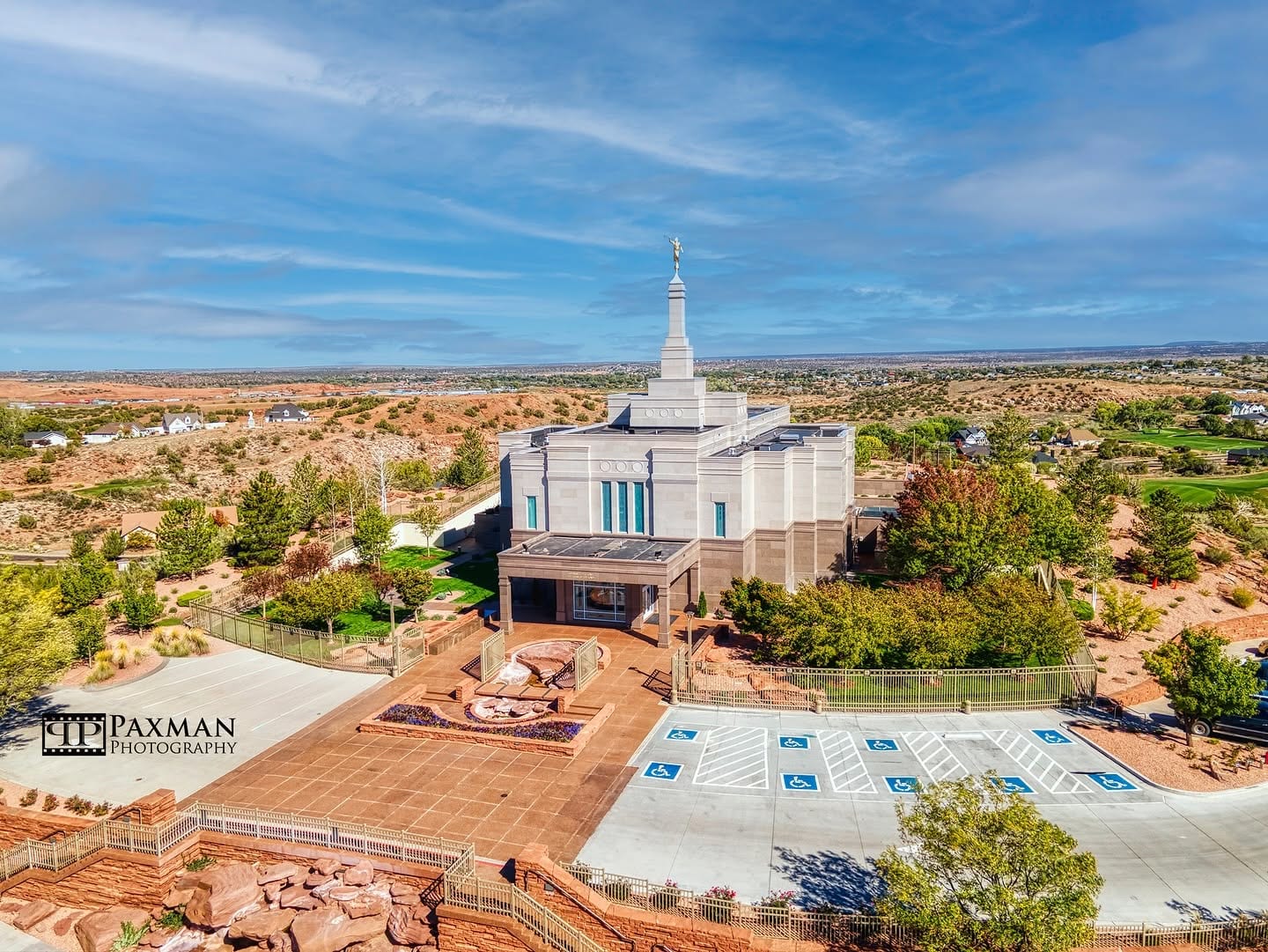
The Snowflake Arizona Temple was the second Latter-day Saint temple built in Arizona, and it remains one of the town's most visible landmarks, sitting on a hill visible from much of the valley. It draws members from across northern Arizona for significant religious observances and serves as a central anchor of community identity. Local events, civic life, and social networks reflect a community with deep LDS roots.
For buyers drawn to a faith-centered, family-oriented small-town setting, this is a genuine draw. Snowflake has below average crime rates, an engaged community, and a social fabric that many families describe as tight-knit and stable. The town also has a Northland Pioneer College campus, a public school district, a public library, a community pool, and enough daily-life infrastructure to function without constant regional drives.
Why Snowflake Can Feel More Culturally Specific Than Nearby Towns
Every White Mountains community has its own character, but Snowflake's is more pronounced than most. In Show Low, you're living in a regional service hub with a broad mix of residents, businesses, and backgrounds. In Pinetop-Lakeside, the second-home and resort market creates a rotating cast of part-time residents and a more transient social feel. Snowflake has neither of those dynamics. It has multigenerational families, established civic institutions, and a social fabric that centers heavily on the LDS community.
Non-LDS buyers report a range of experiences. Some describe Snowflake as welcoming and comfortable once they settled in, particularly buyers who were looking for a conservative, family-oriented environment regardless of religious affiliation. Others note a more noticeable adjustment period, especially around school social dynamics, local business relationships, and the experience of being new in a town where many families have deep roots.
None of that makes Snowflake inhospitable. What it means is that Snowflake has a more culturally specific character than most nearby communities, and going in with clear expectations matters more here than it would in a resort market or a service hub.
The Other Self-Selected Buyers Snowflake Attracts
Beyond the LDS community anchor, Snowflake has a broader pattern of attracting buyers who value quiet, distance, and space on their own terms.
One of the more unusual examples is a small community of people driven here by severe multiple chemical sensitivity and electromagnetic sensitivity, located about seven miles east of town in an area known as Cedar Hills. Over several decades, people with these conditions have built a refuge there, drawn by Snowflake's clean air, sparse population, affordable land, and distance from urban density. High Country News reported on this community back in 2015, and its relevance for buyers isn't that it represents Snowflake broadly — it's that it illustrates how the area consistently attracts people who want distance, quiet, and a very specific kind of separation from denser Arizona markets.
That story is an extreme case, but it points to something true about how Snowflake works. The buyers who tend to stay are the ones who made a deliberate choice to live differently from what suburban Arizona offers. The common thread is self-selection: people who land here generally knew what they were getting into.
When Snowflake May Feel Like a Poor Fit
You came looking for the White Mountains cabin experience. If your mental image involves pine forests, lake access, cabin neighborhoods, and a resort-adjacent feel, Snowflake's open high-desert setting will feel like a mismatch from the first showing. Snowflake is geographically part of the broader White Mountains region, but the ownership experience is more high-desert small town than mountain retreat. That distinction is covered in depth on the high-desert setting page.
You need a local professional job market. Snowflake's local employment base is thin — service work, education, county government, and healthcare roles that mostly point toward Show Low. If your financial life depends on building a professional career locally, Snowflake is likely to frustrate you. The income and employment page covers this in more detail.
You prefer a more varied or anonymous social environment. In a town where many families have lived for generations and community life is tightly organized, newcomers stand out. That's not universally a problem — many transplants integrate well — but if you value a broader mix of social circles, newcomers, seasonal residents, everyday anonymity, or the kind of loose community feel that resort and service-hub towns tend to have, Snowflake will feel more insular than comfortable.
You're counting on local retail and dining variety. Snowflake covers everyday basics, but variety is limited. Spontaneous dining choices, retail selection, and entertainment options are thin. Show Low becomes a regular destination if those things matter to your weekly routine.
How to Test Whether Snowflake Fits Before You Buy
Understanding Snowflake's character is one thing; knowing whether it fits your life is another. A few steps that give you a more honest read than a showing alone:
Visit on a weekday, not just a weekend. Drive the main corridor on a Tuesday afternoon. Check what's open, how it feels, how much foot traffic there is. The pace of a regular weekday tells you more about what you're buying into than a Saturday showing.
Run your actual errands. Drive from the property to the grocery store, the hardware store, and the Show Low service corridor you'd rely on for anything Snowflake doesn't carry. Time the healthcare drive. Make sure the logistics of weekly life make sense from that specific address.
Compare Snowflake and Taylor in the same visit. The two towns share schools, utilities, emergency services, and most civic resources, but they have different residential characters and lot patterns. Looking at both on the same day often clarifies which one's feel matches what you want. The price and value page has more on how the towns compare from an ownership standpoint.
Look at local community groups and recent resident reviews. Forum discussions and review sites surface honest accounts from people who moved here in the last few years. Read across the range — the strongly positive and the critical accounts together will give you a more accurate picture than either alone.
Ask yourself whether you're choosing Snowflake or avoiding something else. Buyers who come to Snowflake because of what it is tend to settle in more comfortably than buyers who come primarily because it's cheaper than Pinetop or quieter than Show Low. Those are valid reasons to look here, but they're not substitutes for wanting this particular kind of town.
Best Fit / Less Ideal Fit
Snowflake tends to be a strong fit if you want a quiet, faith-influenced, family-centered small-town environment; bring your own income rather than depending on local employment; are comfortable with a rural service pace and regular drives to Show Low for anything larger; and genuinely prefer open high-desert character over the forested mountain-cabin setting nearby communities offer.
Snowflake tends to be a harder fit if you are looking for the classic White Mountains resort or cabin experience; want a socially varied or more anonymous community environment; need a deeper local job market; or expect the retail, dining, and entertainment variety of a larger service hub close to home.
Key Tradeoffs
Community rootedness versus cultural specificity. Snowflake's close-knit character is a genuine strength for buyers who connect with it. For buyers who prefer a more varied or less culturally anchored social environment, the same quality can feel limiting rather than welcoming.
Quiet and affordability versus a smaller service base. Snowflake's lower price points and slower pace come with a smaller service footprint. That tradeoff is manageable for buyers who plan around it and frustrating for buyers who discover it after closing.
Deliberate rural life versus incidental rural life. The buyers who thrive here tend to view Snowflake's distance and quiet as features. Buyers who underestimate the rhythm of small-town rural life — fewer impromptu options, longer drives for regional services, fewer professional peers nearby — sometimes find the same qualities harder to live with over time.
Stability versus resort-market upside. Snowflake is a stable market with consistent community identity and low turnover. It’s not safe to evaluate it like a resort-demand or service-hub growth play. If appreciation potential is a primary buying goal, compare recent sales pace, inventory, and buyer demand against Show Low and Pinetop-Lakeside before assuming the lower entry price creates stronger upside.
What to Verify Next
Before you commit to Snowflake, verify the property-level details that affect how well the community works from your specific address.
Confirm utility setup — water, wastewater or septic, electric, trash, and heating fuel — because properties outside the town core can have meaningfully different infrastructure than in-town homes. Verify internet service at the exact address if remote work is part of your plan; the income and employment page covers the connectivity picture in more detail. Check road access and seasonal conditions if the property is on a rural edge or larger lot. And get insurance quotes early, particularly for any acreage or rural-fringe property where wildfire exposure, defensible space, or address-specific conditions may affect coverage — the acreage and property-type page covers those questions.
Related Local Questions
Is Snowflake, AZ heavily influenced by the LDS church?
Yes, in visible and practical ways. Snowflake was founded by Mormon pioneers and has maintained strong LDS ties throughout its history. The Snowflake Arizona Temple is one of the town's most prominent landmarks, and community events, civic life, and social networks reflect that heritage. Buyers of all backgrounds live in Snowflake, but the LDS presence shapes local character in ways you'll notice in daily life.
Is Snowflake a good place to live if you're not LDS?
Non-LDS buyers who are comfortable in a conservative, faith-influenced, family-oriented small-town setting often describe Snowflake as welcoming once they're settled. Non-LDS buyers who want a more varied, socially anonymous, or less culturally specific environment tend to find the adjustment more noticeable. Visiting during ordinary weekday life — rather than just during showings — gives you a better read on fit than any description can.
Why do people choose Snowflake over Show Low or Pinetop?
Usually because they want something those communities don't offer: more quiet, more space, a lower price point, or a more rooted small-town identity. Show Low is a service hub with a broader demographic mix and more daily-life infrastructure. Pinetop skews toward the forested cabin and second-home market. Snowflake appeals to buyers who want a real town with genuine community character, a high-desert setting that feels open rather than resort-adjacent, and a pace that prioritizes stability over activity.
What kind of buyers tend to stay in Snowflake long-term?
Buyers who stay tend to share a few things: they came with accurate expectations about the rural pace and smaller service base; their income situation didn't depend on local employment; and they connected with — or at minimum were comfortable with — the community's close-knit, faith-influenced character. Remote workers, retirees, self-employed buyers, and families specifically seeking a quiet, values-oriented environment are the most consistent long-term fits.
What is the environmental sensitivity community near Snowflake?
About seven miles east of town, in an area called Cedar Hills, a small community of people with severe multiple chemical sensitivity and electromagnetic sensitivity has established a refuge over several decades. They were drawn by Snowflake's clean air, sparse population, affordable land, and distance from denser development. It's a small, largely self-contained group, not a mainstream Snowflake neighborhood. But it's worth knowing about as a signal of the kind of intentional, self-selected quality that runs through Snowflake's character more broadly.
How does Snowflake compare to Show Low and Pinetop for community feel?
Show Low has a more mixed, service-hub character with a broad demographic range and deeper daily-life infrastructure. Pinetop-Lakeside skews toward seasonal second-home buyers and has a more transient, resort-influenced feel. Snowflake is more rooted, more rural, and more culturally specific than either. It's a different kind of community — not a lesser version of its neighbors — and the buyers who choose it deliberately tend to get the most out of it.