Buying a Cabin or Second Home in Pinetop, AZ? What to Know First
What Should You Verify Before Buying a Cabin or Second Home in Pinetop?
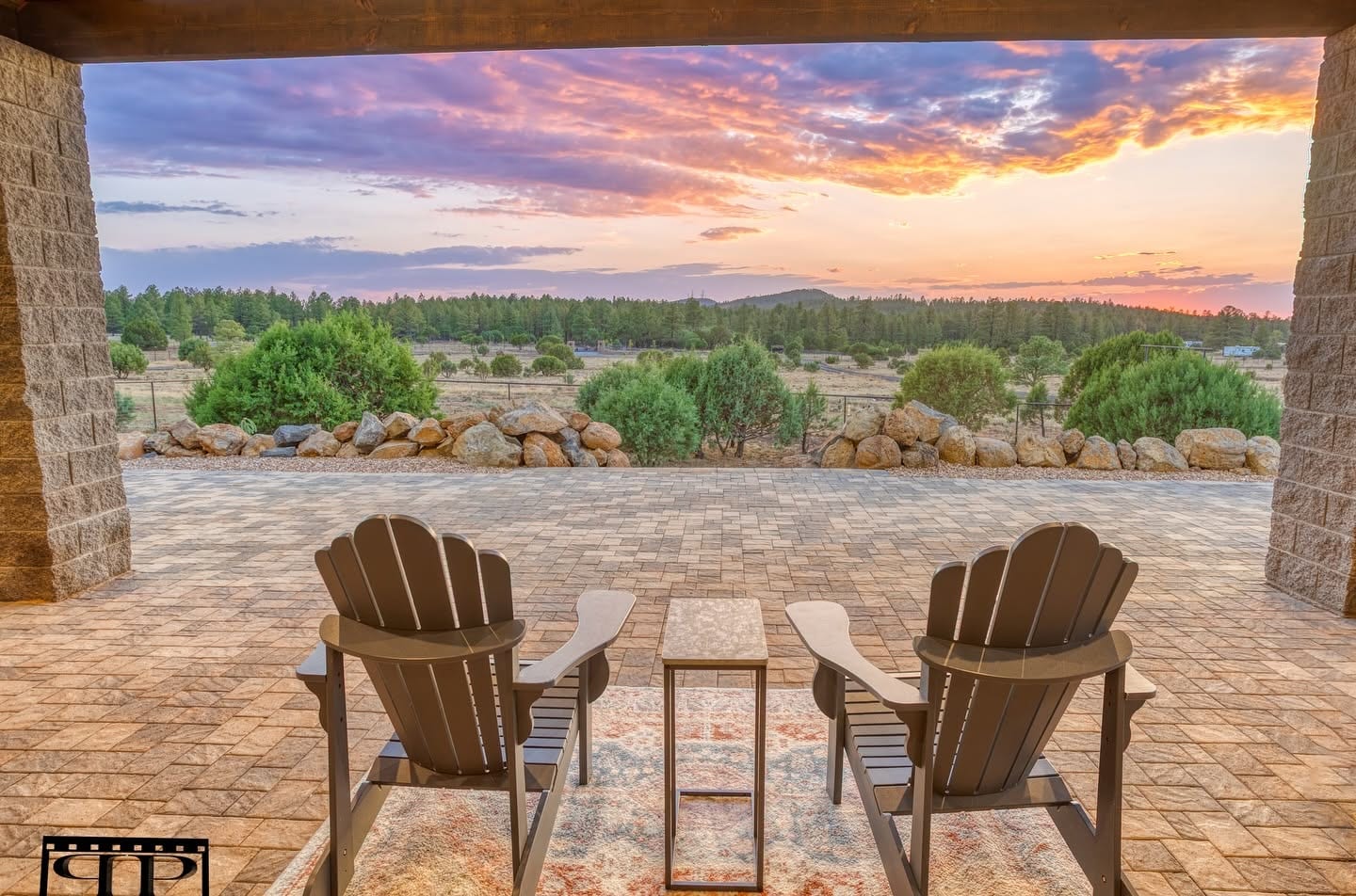
Pinetop's cabin and second-home market rewards buyers who ask property-level questions early. Here's what the ownership setup typically involves — from short-term rental rules and wildfire insurance to wells, septic, and the incorporated/unincorporated boundary.
Pinetop's forested setting is its signature: ponderosa pines, cooler temperatures, trails, and a slower pace. That's what draws second-home buyers here rather than to the lakes-first character of Lakeside next door. And for many Arizona buyers escaping lower-elevation heat, the cabin idea makes sense quickly.
The due diligence takes longer. A Pinetop cabin purchase involves questions that don't come up in a more uniform suburban market. The biggest mistake is assuming "Pinetop cabin" tells you enough. In practice, the parcel may be governed by town or county rules, served by district sewer or septic, eligible or ineligible for short-term rental (STR) use, straightforward or complicated to insure, and supported by an HOA, a private road agreement, or individual owner maintenance with no reliable way to guess which from the listing.
Quick answer
Before closing on a Pinetop cabin or second home, the property-level questions that matter most are: whether the parcel is inside incorporated Pinetop-Lakeside or in unincorporated Navajo County (which affects zoning, road maintenance, STR rules, and sanitary district access); what the water and wastewater setup is, including whether private wells or septic are involved; what wildfire insurance is available to you, not what the seller currently pays; and whether STR use is part of your plan, because the town's licensing requirements and HOA rules operate as separate layers that can conflict. Winterization, vacant-home monitoring, and road access also need address-level verification.
Best fit / less ideal fit
Best fit
Pinetop works well for second-home buyers who want a forested mountain retreat — pines specifically, in a way that distinguishes Pinetop from Lakeside's more lake-oriented character — and who are prepared to do property-level due diligence before closing. That means treating utilities, infrastructure, zoning, insurance, and ownership rules as live verification items rather than background assumptions.
It's a good fit for buyers drawn to HOA-governed or association-style communities — golf-area properties, townhomes, or country club neighborhoods — as long as dues, rental policies, maintenance scope, and use restrictions have been confirmed rather than assumed.
Less ideal fit
Pinetop may be frustrating if you expect mountain second-home ownership to run smoothly without a plan. The cabin itself is usually what you expected. The operating setup requires attention before it runs well: winterization coordination, wildfire insurance sourcing, vacant-home monitoring, and vendor relationships. Buyers who skip that work tend to encounter the surprises after closing.
Key tradeoffs
Wooded setting vs. maintenance load. Pine cover is the defining appeal, but it brings defensible-space work, needle and debris cleanup, roof and gutter attention, and ongoing wildfire insurance management. The character and the maintenance come together.
HOA convenience vs. rule constraints. Country club and association communities can reduce the friction of part-time ownership substantially, but dues, rental restrictions, guest policies, and exterior rules need to be confirmed before closing.
Cabin character vs. systems reliability. Older Pinetop cabins have the aesthetic buyers want, but heating systems, plumbing, insulation, roof condition, and wastewater arrangements deserve close inspection. A charming cabin on a private well with an aging septic system is a different ownership proposition than a newer HOA unit.
STR income potential vs. licensing and HOA constraints. The STR market in Pinetop is real — the area draws consistent visitor demand — but operating legally requires a town license, $500,000 liability insurance, and compliance with neighbor notification rules. HOA rules may restrict or prohibit rentals entirely, independently of the town's framework. Both layers apply.
Incorporated vs. unincorporated address. Some highly desirable Pinetop properties sit in unincorporated Navajo County rather than within town limits. That affects zoning, road maintenance responsibility, STR licensing jurisdiction, and sanitary district access in ways that are worth understanding before you close.
Town limits vs. unincorporated Navajo County: confirm this first
Some of Pinetop's most sought-after second-home communities — Pinetop Country Club, Pinetop Lakes Country Club, and White Mountain Summer Homes — sit in unincorporated Navajo County, not within the incorporated Town of Pinetop-Lakeside. The distinction is invisible on a map and rarely mentioned in listing descriptions, but it affects several things that matter at closing and after:
Zoning authority: Navajo County zoning rules apply rather than town zoning. Code enforcement, setback requirements, and land use allowances follow county rather than town frameworks.
Road maintenance: County roads are maintained by Navajo County. Snow plowing response times, repair standards, and maintenance responsibility differ from town-maintained streets.
STR licensing: The town's STR ordinance (Chapter 5.28) applies only within incorporated town limits. Properties in unincorporated areas are governed by county rules and their HOA documents instead.
Sanitary district access: Properties outside the existing service boundary may face more limited or more costly access to Pinetop-Lakeside Sanitary District sewer service, depending on their location relative to existing infrastructure.
The Town of Pinetop-Lakeside's website notes that residents of surrounding county areas have approached the town about annexation, and a survey has gone out on four possible areas. Annexation requires signatures from 51% of property owners representing 50% of property value. It's not a done deal, and the timeline is uncertain. Buyers in potentially affected areas should be aware of the process without counting on a particular outcome.
To confirm which jurisdiction governs a specific parcel, contact the Town of Pinetop-Lakeside or Navajo County directly. The mailing address and the incorporated boundary don't always coincide.
For deeper treatment of what HOA and country club membership involves in these communities, the Pinetop HOA and Country Club page covers governance, membership, and community-specific rules.
If short-term rental (STR) use is part of your plan
Start by confirming jurisdiction. If the property is inside incorporated Pinetop-Lakeside, the town's Chapter 5.28 ordinance applies. If it's in unincorporated Navajo County, county rules and HOA documents govern instead, and the town's licensing framework does not apply.
For properties inside town limits, the requirements are:
- Annual license: $250 per property, per year. Each rental unit requires its own license.
- Liability insurance: At least $500,000 in aggregate coverage before the first rental, either through a personal policy or confirmed through a platform providing equivalent primary coverage.
- Emergency contact: A designated individual with a 24-hour phone number, identified in the application and available to respond when requested.
- Neighbor notification: Before the first rental, written notice goes to adjacent properties, properties directly across the street, and properties diagonally across the street, including your permit number, property address, and emergency contact information.
- Registration number: Must appear in every listing advertisement and be posted conspicuously inside the rental unit at all times.
Rentals of 30 consecutive days or longer are exempt from the town's STR license, though state transaction privilege tax obligations still apply.
The town's framework and HOA rules operate on separate tracks. A property that qualifies for a town STR license may still be prohibited from short-term renting under its CC&Rs. Confirm both before you write an offer if rental income is part of the plan, and treat them as independent questions because the answer to one doesn't predict the answer to the other.
Wildfire insurance: get quotes before your inspection deadline
Pinetop carries a severe wildfire risk score (77 out of 100), and virtually every cabin or wooded residential property here sits in forested WUI (wildland-urban interface) territory. For buyers, the practical move is to start the insurance conversation early in due diligence, before your inspection contingency closes, so the answer can still affect your offer, your negotiation, or your decision to proceed.
The wildfire insurance market has tightened across high-risk western mountain areas in recent years. Northern Arizona buyers have seen non-renewals, tighter underwriting requirements, and premium increases that don't reflect what sellers currently hold. Arizona homeowners insurance premiums rose roughly 48% statewide between 2021 and 2024. In northern Arizona specifically, some carriers have stopped writing new policies in certain ZIP codes or have non-renewed existing policyholders citing wildfire exposure.
What the seller currently pays is not a reliable guide to what's available to you. Previous policy terms may not be replicable, and a property that pencils financially using the seller's insurance assumption may look different once you have your own quotes.
Before your inspection deadline:
- get quotes from multiple carriers.
- ask each underwriter about WUI designation, vegetation proximity, roof materials, defensible space requirements, and what a Firewise community designation does for eligibility and rates.
- confirm what the policy covers and excludes.
- factor the quoted premium into your ownership cost calculation, not the seller's current payment.
The sooner you start this, the more room you have to respond to what you find.
Water, wastewater, and infrastructure: verify at the parcel
Many buyers are drawn to older forested cabin areas, and those properties can involve private wells, septic systems, HOA-managed water, or privately maintained roads depending on the parcel. The Pinetop-Lakeside Sanitary District serves much of the community, but its service boundary doesn't uniformly cover all Pinetop addresses. For properties outside the existing service area, connecting to district sewer involves an annexation fee of $5,870 per acre (2024/2025 rate) plus connection fees; it's not a default option or a free one.
Some communities, including White Mountain Summer Homes, operate HOA-managed well systems rather than connecting to a municipal or district water provider. That's a distinct ownership situation from either private individual wells or utility water service, with its own maintenance structure and costs.
Before closing, confirm:
Water: Is the property served by Pinetop Water Community Facilities District, Arizona Water Company, an HOA-managed well system, or a private well? If a private well: age, output, and water quality test results.
Wastewater: Is the property on district sewer or on a private septic system? If septic: tank age, last inspection and pumping date, field location, system capacity, and whether the lot has room for field replacement.
Electric: Navopache Electric Cooperative serves the area. Confirm setup at the address.
Gas: UniSource Energy Services provides natural gas in parts of the area. Heating fuel in Pinetop-Lakeside runs roughly 45% utility gas, 30% electric, 18% wood, and 5% propane, so confirm the home’s heating setup. If it’s propane-dependent, verify tank ownership, supplier agreements, and delivery availability.
Roads: Confirm whether the street is maintained by the town, Navajo County, ADOT, the HOA, a private road agreement, or individual owners. The answer determines who plows after a storm and who's responsible if the road needs repair.
Winterization and vacant-home planning from another city
Pinetop averages 70 inches of annual snowfall and sees January lows around 20°F. A second home that sits empty for stretches of winter needs a specific plan for that period.
Ask the current owner what happens if they leave for the season: Is heat kept on, and at what thermostat setting? Are pipes drained? Are there crawl spaces, hose bibs, or outbuildings that need separate attention? Has the property had prior freeze or pipe damage?
Before closing, identify a local contact — a neighbor, property manager, or reliable handyman — who can check the property after significant weather events. Confirm plumber, HVAC, and electrician contacts who serve the area. Know where the water shutoff is and that it's accessible. A smart thermostat or remote temperature sensor gives you visibility from Phoenix without requiring a call after every cold snap. For propane-heated properties, set up a delivery schedule before the season starts.
On road and driveway access: verify grade, surface, sun exposure, and snow removal responsibility. A north-facing or heavily shaded driveway holds ice longer than its surroundings. A steep grade that's manageable in October may require chains or 4WD after a storm. Confirm whether the street is plowed and by whom, so you know what you're arriving into after a weather event. Roof condition — pitch, age, flashing, gutters — deserves the same attention as the driveway, given 70 inches of annual snowfall at nearly 6,800 feet.
Internet and remote monitoring
Fiber broadband covers roughly 92% of Pinetop homes, with Frontier Communications and Sparklight as the primary wired providers. That's a community-wide figure; verify at the exact address, particularly for properties deeper in the trees or at the edge of the corridor.
For part-time ownership, connectivity matters even without remote-work requirements. Smart thermostats, security cameras, leak sensors, and remote locks all depend on reliable service. Test cell signal during a showing. A cabin set back from the road in a heavily wooded lot may have weaker coverage than the community average suggests.
What to verify before making an offer
Incorporated or unincorporated: Confirm with the town or Navajo County which jurisdiction governs the specific parcel. It determines zoning, road maintenance, STR rules, and sanitary district access.
Water: Confirm the provider: utility district, HOA-managed well, or private well. If a private well, inspect thoroughly.
Wastewater: Confirm sewer vs. septic with the Pinetop-Lakeside Sanitary District. If septic: age, inspection history, capacity, and field condition.
STR eligibility: If you plan to rent short-term, confirm jurisdiction first, then verify the town's licensing requirements and the HOA's rental rules independently. Both apply within town limits, and they can conflict.
Wildfire insurance: Get quotes before the inspection deadline. Ask underwriters specifically about WUI designation, vegetation, defensible space, and roof materials. The seller's current premium is not a reliable representation of what's available to you.
Heating and utilities: Confirm heating system type, fuel source, and providers for water, electric, gas or propane, and trash at the address.
Winterization: Ask how the current owner prepares the home when vacant. Build your own plan before closing.
Road and driveway: Confirm snow removal responsibility, road jurisdiction, driveway grade, and winter access.
HOA documents: Verify dues, rental policies, CC&Rs, maintenance scope, and what the association covers vs. what remains your responsibility.
Local service network: Identify a local contact for vacant-home checks, storm response, and urgent repairs before you need one.
Related local questions
Does the town's STR ordinance apply to all Pinetop properties?
Only to properties inside incorporated Pinetop-Lakeside. Properties in unincorporated Navajo County — including areas like Pinetop Country Club and White Mountain Summer Homes — are governed by county rules and HOA documents instead. Confirm which jurisdiction applies to the specific address before assuming either framework.
Why does the incorporated/unincorporated distinction matter for a second-home buyer?
It determines which zoning rules apply, who maintains the road, how code enforcement works, what the STR licensing framework is, and what the path to sanitary district sewer access looks like. Two properties a short distance apart can be under entirely different governance depending on which side of the incorporated boundary they fall on.
How do I approach wildfire insurance for a Pinetop cabin?
Start early, before your inspection contingency closes. Get quotes from multiple carriers and ask each one specifically about WUI designation, vegetation proximity, defensible space, and roof materials. The wildfire insurance market has tightened in northern Arizona, and the seller's current policy may not be available to you on the same terms. The time to find that out is during due diligence, when you can still respond to what you learn.
What's the water situation in older Pinetop cabin areas?
It varies by parcel. Some properties connect to a utility district; some are on private wells; some are in HOA communities that operate their own water systems. The Pinetop-Lakeside Sanitary District serves much of the area for wastewater, but not all addresses are within its service boundary. Confirm the specific setup — water provider, wastewater arrangement, and what connection to district sewer would involve — before closing.
What surprises second-home buyers in Pinetop most often?
The operational ones: getting real wildfire insurance quotes before removing contingencies, finding out the property is in unincorporated county rather than town limits, discovering the STR licensing requirements after they've already planned for rental income, and building a vacant-home support network from another city. The cabin is usually what buyers expected. The ownership setup requires more research than most anticipate.