What to Consider if You’re Looking to Buy in Murrieta’s Foothill or Open-Space Areas
What should Murrieta buyers verify about fire risk, insurance, and open-space lots?
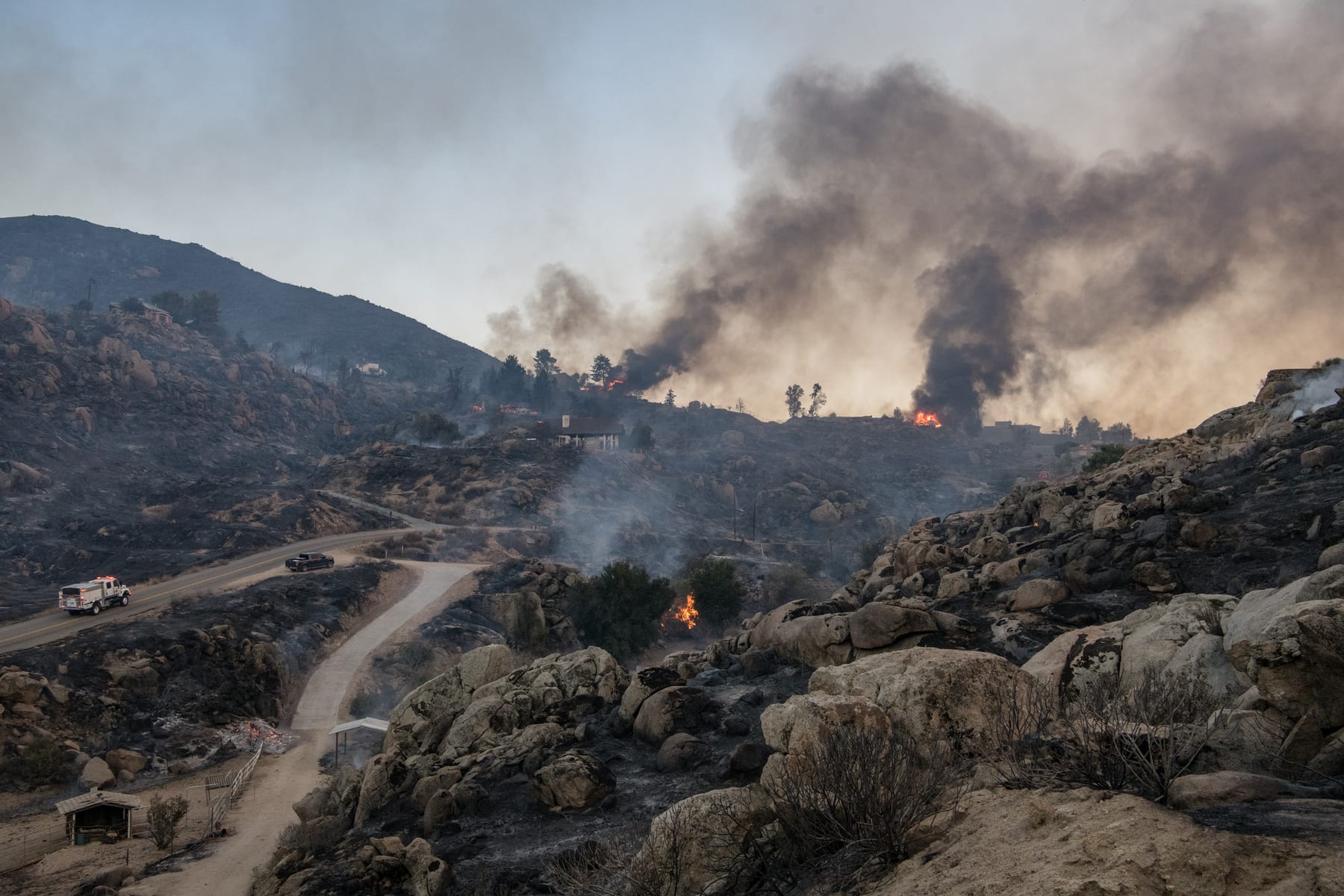
Parts of Murrieta — particularly along the western foothills — carry CAL FIRE High and Very High Fire Hazard Severity Zone designations, updated July 2025. For homes near open space, canyons, or hillside settings, fire risk, insurance availability, and defensible-space obligations are parcel-level questions. Here's what to verify, and in what order.
Fire exposure is not uniform across Murrieta. Western foothill, canyon-edge, hillside, and open-space-adjacent properties raise different insurance, inspection, and maintenance questions than flatter central or east-side lots. Those differences are parcel-specific, not neighborhood-wide.
If you're looking at a home near foothills, canyons, open space, or a hillside setting, the right question isn't whether the general area has fire exposure. It's what the specific parcel's designation is, what that means for insurance availability, and what ongoing obligations come with owning there.
For a foothill or open-space-adjacent Murrieta home: verify in this order
Before you're too far into escrow to adjust your offer strategy or exit cleanly, work through these address-level checks:
- Get an address-specific insurance quote
- Look up the parcel's current CAL FIRE FHSZ designation
- Confirm whether point-of-sale defensible-space documentation applies
- Understand ongoing defensible-space and vegetation obligations
- Check drainage, slope, and retaining-wall conditions
- Review HOA documents for maintenance boundaries
Don't rely on the neighborhood name, the listing description, or the general area to answer any of these. The answers vary by parcel.
Quick answer: start with insurance
For any Murrieta home where fire exposure may be a factor, get an address-specific insurance quote before you're too far into escrow to adjust. Don’t settle for a ZIP code estimate — you need a broker inquiry on the specific address.
That single step will tell you more about the property's real fire-risk picture than any neighborhood description will. If the quote comes back straightforward, you can proceed with normal due diligence. If it surfaces underwriting complications, California FAIR Plan considerations, or defensible-space requirements you weren't expecting, you've learned something important while you still have time to recalibrate.
Everything else on this page — the hazard zone maps, the point-of-sale defensible-space rules, the ongoing clearance obligations, the drainage and slope checks — is the work you do after you know the insurance picture is workable.
How to check the current CAL FIRE hazard zone for a Murrieta parcel
California's Fire Hazard Severity Zone maps are the official framework for classifying wildfire exposure on residential parcels. Murrieta's current maps took effect July 4, 2025, based on the updated CAL FIRE / Office of the State Fire Marshal (OSFM) statewide mapping process. The City of Murrieta Fire & Rescue references these designations directly.
The update matters for buyers because designations changed for some properties. If you're relying on fire hazard information about a property from before mid-2025 — from a prior listing, a disclosure from a previous transaction, or a general neighborhood description — it may no longer reflect the current map.
Murrieta's FHSZ landscape includes parcels designated Moderate, High, and Very High. The highest-designation areas are concentrated in and around the western foothill corridor: properties near open space, canyon edges, and hillside settings on the west side of the city.
TMRE_RENDERED_TABLE_0
What to verify: Look up the specific parcel's current designation using the CAL FIRE / OSFM mapping tool at osfm.fire.ca.gov. The address-level result is what matters; the general area or neighborhood name is not a reliable substitute.
Point-of-sale defensible-space requirements
California law includes point-of-sale defensible-space disclosure and compliance requirements for homes in designated High and Very High Fire Hazard Severity Zones. Under AB 38 and related regulations, sellers of affected properties can be required to provide documentation of defensible-space compliance as part of the transaction. The exact requirements, timing, and responsible party can depend on the local jurisdiction and the specifics of the sale, so confirm the current rules with your escrow officer or agent early in the process — not at the end.
In practice, this means: if you're buying a home in a High or Very High FHSZ in Murrieta, ask whether defensible-space documentation has been obtained and what condition the seller is prepared to meet before closing. A property where the seller hasn't addressed this yet is not necessarily a problem, but it's a detail to track and resolve before you remove contingencies.
What to verify: Ask your agent and escrow officer what defensible-space documentation requirements apply to the specific address, what the seller's plan is if clearance work is needed, and whether any compliance timeline affects the closing schedule.
Murrieta's Fire Risk Reduction Community designation
In July 2024, Murrieta received official Fire Risk Reduction Community designation from the California Board of Forestry and Fire Protection, valid through 2026. The designation recognizes that the city meets defined standards for community-level fire preparedness and risk reduction.
Under California's Safer from Wildfires framework and related regulations, insurers are required to account for community-level wildfire mitigation factors — including Fire Risk Reduction Community status — when making underwriting decisions for properties in affected areas. That doesn't guarantee coverage or any particular premium outcome. Individual parcel conditions — vegetation, slope, roof material, access, proximity to open space — still drive what carriers will offer and at what cost.
For buyers in affected foothill and open-space areas, this designation is worth raising with your insurance broker when you're getting quotes. It's part of the conversation, not a solution to it.
Insurance: what to ask for and when
For a Murrieta foothill or open-space-adjacent home, standard homeowners insurance may look different from what you'd find for a flat central address at the same price. In parts of the western foothill corridor, carrier availability has tightened and underwriting conditions are more common.
Your options generally fall into two categories:
Standard carrier coverage, available for many foothill properties, often with conditions tied to roof age and material, defensible-space clearance, and distance from brush or open space.
California FAIR Plan plus a wrap policy for properties where standard carriers decline to quote or impose conditions that don't fit the situation. The FAIR Plan covers the structure; a separate wrap policy fills in the gaps a FAIR Plan policy doesn't cover.
Getting coverage is possible for most foothill properties, but the combination of coverage type, deductible structure, and annual premium can look meaningfully different from what you'd expect based on purchase price alone. That's why pricing insurance before you're committed is the right move.
What to ask your broker:
- Is this address in a High or Very High FHSZ?
- Which standard carriers will quote this address?
- Are there underwriting conditions tied to roof, vegetation, or slope?
- Would the California FAIR Plan apply here, and if so, what wrap coverage would be needed?
- What does the estimated annual premium range look like for this specific property?
Defensible space: the ongoing obligation
Defensible space is not a one-time inspection item. It's an ongoing ownership responsibility for homes near vegetation, open space, or brush. And in Murrieta's higher-FHSZ areas, fire authorities enforce it.
California law establishes clearance requirements in two zones around homes in designated areas. The zone closest to the structure (generally 0–30 feet) requires intensive vegetation management: removing dead material, spacing plants to slow fire spread, keeping tree branches away from the roofline. The outer zone (roughly 30–100 feet) requires reduced and spaced vegetation without full removal.
For homes in HOA-managed communities, the association may handle some of this work for common areas and shared slopes, but owner responsibility for the immediate lot typically remains. Review the HOA documents to understand exactly where association maintenance ends and your obligation begins.
Annual vegetation clearance, tree trimming, and brush management are real ongoing costs. Ask the current owner what they spend on this work. For hillside or larger-lot properties, professional maintenance is often the realistic model rather than DIY upkeep.
Flood and drainage: a secondary check for hillside and creek-adjacent lots
Most of Murrieta falls within FEMA Zone X, outside the 100-year floodplain. That said, areas along Murrieta Creek and Warm Springs Creek have documented flood exposure, and hillside properties can develop drainage problems that don't surface during a dry showing. Water movement on sloped lots, across grades, or near drainage channels deserves a look regardless of the FEMA designation.
For a foothill or hillside home, check where runoff moves during a heavy rain: toward the house or away from it, across a slope, into a swale. Look for signs of erosion, settlement, staining, or past repairs around retaining walls, gutters, and drainage features.
What to verify: Check the specific parcel's flood zone at msc.fema.gov. Review seller disclosures for any drainage or water-intrusion history. For sloped or hillside properties, have a qualified inspector assess drainage and grading beyond what a standard inspection typically covers.
Slope and lot conditions
Fire and insurance lead the verification list for foothill properties, but the physical lot deserves its own pass.
Sloped lots in Murrieta's foothill areas can involve retaining walls, engineered grading, hillside driveways, and landscape areas that require more maintenance than a flat suburban lot. The specifics matter: how steep is the slope, what's engineered versus natural, who's responsible for retaining wall maintenance — owner or HOA — and what does the yard realistically require in ongoing upkeep?
Two homes in the same foothill area can have very different practical ownership profiles based on slope angle, lot configuration, retaining wall condition, irrigation complexity, and HOA landscape rules. The listing photos and neighborhood name won't tell you which situation you're getting.
What to verify: Have a qualified inspector assess slope, drainage, grading, retaining walls, and exterior conditions beyond a standard inspection. For larger or more complex hillside lots, a separate geotechnical review may be warranted. Ask what the seller has spent on slope care, irrigation, tree work, and exterior maintenance annually.
Best fit / less ideal fit
This level of verification fits well if you're considering a home near Murrieta's western foothills, open space, canyon edges, or hillside settings — the areas where FHSZ designations, insurance complexity, defensible-space obligations, and slope conditions are most likely to be real factors rather than background considerations. It also applies to any property near the Murrieta Creek or Warm Springs Creek corridors where flood exposure warrants a separate check.
This level of verification is less intensive for homes that are clearly outside foothill, open-space, creek-corridor, and hillside conditions. Standard due diligence still applies, but the fire-risk and insurance complexity this page addresses is concentrated in the west-side foothill corridor, not citywide.
Key tradeoffs
Views and setting vs. verification complexity. Foothill and open-space-adjacent homes in Murrieta can offer privacy, views, and a less purely suburban feel. The tradeoff is a more involved address-level due-diligence process: insurance, fire risk, defensible space, drainage, slope, and HOA landscape rules all become real questions rather than background ones.
HOA management vs. maintenance clarity. In gated or managed foothill communities, the HOA may handle some common-area and slope maintenance. The boundary between what the association covers and what falls on the individual owner isn't always clear from the listing. Review the documents before assuming the setting comes with low individual maintenance responsibility.
Proximity to open space vs. ongoing upkeep. Open-space-adjacent lots can be genuinely appealing and require sustained vegetation management, brush clearance, and landscape maintenance. The appeal of the natural edge and the work it creates travel together.
Fire designation vs. insurability. A High or Very High FHSZ designation doesn't make a home uninsurable. It changes the insurance conversation: which carriers will quote, under what conditions, and at what cost. Murrieta's Fire Risk Reduction Community designation is a relevant factor in that conversation. It doesn't resolve individual parcel conditions, but it belongs in the discussion.
What to verify next
Work through these in order for any Murrieta foothill, open-space-adjacent, or hillside property:
First, insurance. Get an address-specific broker quote before you're committed to the property. Ask about FHSZ designation, carrier availability, underwriting conditions, FAIR Plan applicability, and estimated annual premium.
Second, FHSZ designation. Look up the specific parcel at osfm.fire.ca.gov. Confirm whether it falls in a Moderate, High, or Very High zone under the current July 2025 maps.
Third, point-of-sale defensible-space requirements. Ask your agent and escrow officer what documentation requirements apply to the address, what the seller's plan is for any required clearance work, and whether any compliance timeline affects closing.
Fourth, ongoing defensible-space obligations. Understand what annual vegetation clearance, brush management, and tree work will realistically cost for the specific lot. Ask what the seller has spent.
Fifth, flood and drainage. Check the FEMA flood map at msc.fema.gov for the parcel. Review seller disclosures for any drainage or water-intrusion history. For sloped or hillside lots, have a qualified inspector assess drainage and grading.
Sixth, slope and lot conditions. Have a qualified inspector evaluate slope, grading, retaining walls, and exterior conditions beyond a standard inspection. For larger engineered hillside lots, consider a geotechnical review.
Seventh, HOA landscape and maintenance boundaries. If the property is in an HOA-managed community, review the documents for rules and responsibilities tied to slope, brush clearance, fencing, tree removal, and drainage-adjacent areas.
For context on how these foothill and open-space properties compare to other parts of the city, see how west, central, and east Murrieta differ by area fit and ownership type. For how insurance costs interact with HOA dues and Mello-Roos as part of your total monthly carrying cost, see why two same-price Murrieta homes can cost different amounts each month. If you're also evaluating Temecula homes with fire exposure, the Temecula wildfire risk page covers that market's verification framework separately.
Related local questions
Did Murrieta's fire hazard zone maps change recently?
Yes. CAL FIRE updated its statewide Fire Hazard Severity Zone maps, with Murrieta's current maps taking effect July 4, 2025, per the City of Murrieta Fire & Rescue. If you're working from fire hazard information about a property that predates mid-2025 — from an earlier listing, a prior disclosure, or a general neighborhood description — verify the current designation at osfm.fire.ca.gov before drawing conclusions.
What are the point-of-sale defensible-space requirements for Murrieta homes?
For homes in High and Very High Fire Hazard Severity Zones, California law can require sellers to provide documentation of defensible-space compliance as part of the transaction. The exact requirements and timing can vary, so confirm what applies to the specific address with your agent and escrow officer early in the process. Don't wait until the end of escrow to find out what the seller needs to provide or address.
What is Murrieta's Fire Risk Reduction Community designation?
Murrieta received Fire Risk Reduction Community designation from the California Board of Forestry and Fire Protection in July 2024, valid through 2026. Under California's wildfire mitigation framework, insurers are required to account for this kind of community-level designation when making underwriting decisions for properties in affected areas. It doesn't guarantee coverage or any specific rate, but it's a real factor worth raising with your insurance broker when you're getting quotes for a foothill or open-space-adjacent property.
Is it hard to get home insurance for a Murrieta foothill home?
It depends on the specific property. Many foothill homes can be insured through standard carriers, though conditions around roof age, defensible-space clearance, and brush proximity are common. For properties where standard carriers decline or impose conditions that don't fit, the California FAIR Plan plus a wrap policy is available. The earlier you get a broker-level quote on the specific address, the more time you have to work through the options before contingency deadlines arrive.
Are all Murrieta foothill homes in a High or Very High FHSZ?
No. Designations are parcel-specific. Two homes in the same general foothill area can carry different designations depending on slope, vegetation, proximity to open space, and access conditions. Look up the specific address at osfm.fire.ca.gov rather than assuming based on the general neighborhood or listing description.