West Murrieta, Central Murrieta, or East Murrieta: Which Area Fits Your Home Search?
West Murrieta, Central Murrieta, or East Murrieta: Which Area Fits Your Home Search?
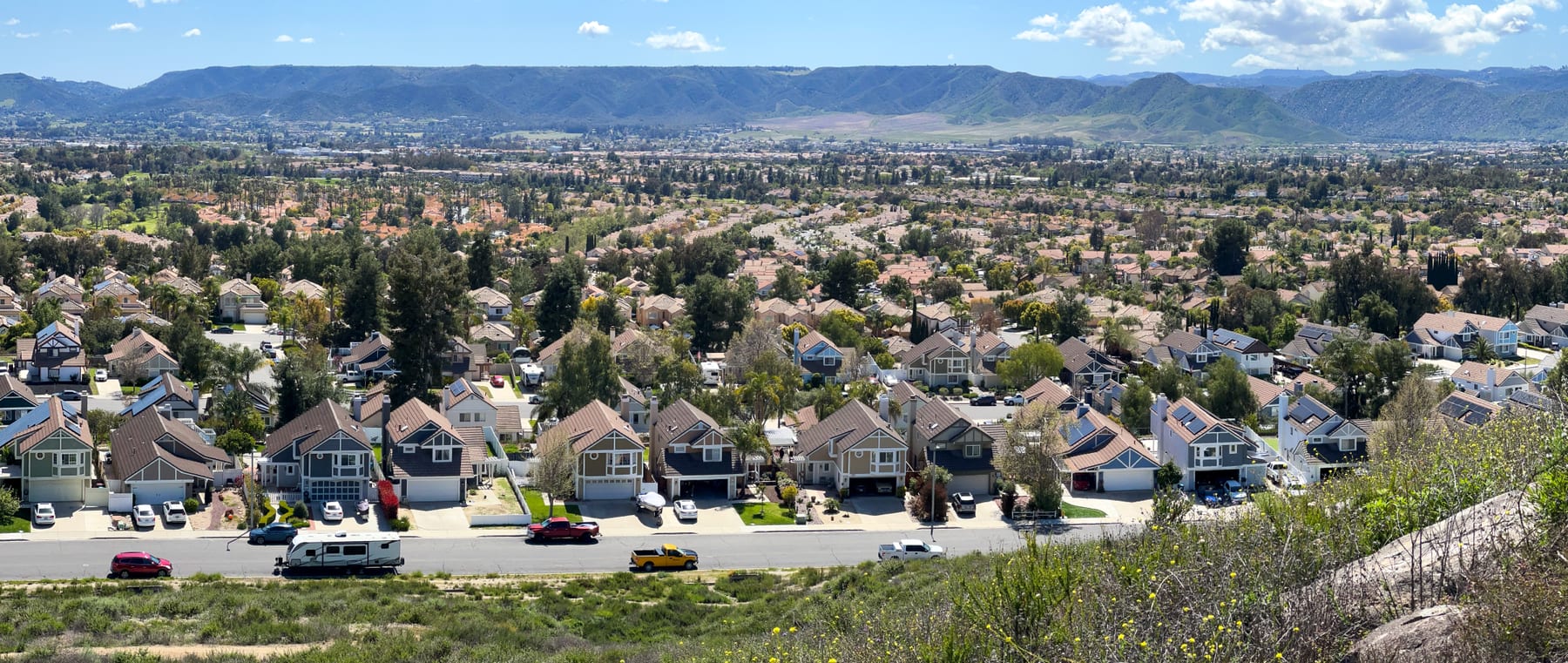
Where you land in Murrieta changes what daily life feels like, what the property asks you to manage, and what the ownership checklist looks like. West, central, and east Murrieta each draw different buyers for real reasons — but the match depends on your routine, your tolerance for HOA structure, and what the specific address actually delivers.
Murrieta is not one uniform suburban market. The same list price can get you a foothill setting with gated access and open-space views on the west side, an established neighborhood close to shopping and healthcare in the center, or a newer master-planned subdivision with community amenities to the east. What those options mean for your daily life, your ownership obligations, and what you'll need to verify depends on which part of the city the specific address is in.
The mistake most buyers make is starting with a neighborhood name before they've worked out what that part of Murrieta actually changes about how they'd live there.
Use this page to choose a starting search zone
Use this page to decide which part of Murrieta to focus on first — not to pick a specific neighborhood. West Murrieta generally changes the setting and property-verification conversation. Central Murrieta usually changes daily convenience. East and northeast searches often raise newer-home, HOA-structure, and address-boundary questions. Confirm the specific parcel before relying on any area label.
Commute direction is a related but separate question: which side of the I-15/I-215 split fits your regular routes is covered on the Murrieta commute and freeway access page. This page focuses on the ownership and daily-life differences between parts of the city.
Quick answer: match the area to your routine first, then narrow by property
If a foothill or open-space setting is part of the appeal — views, gated-community options, more separation from busy corridors — west Murrieta is usually the right starting zone. If you want lower friction for errands, healthcare, parks, and everyday services, central Murrieta tends to deliver that most reliably. If newer-home inventory, master-planned amenities, or a northeast-oriented search pattern matters to you, east and northeast Murrieta deserves a close look — with address-level boundary checks before you assume what you're getting.
TMRE_RENDERED_TABLE_0
West Murrieta: foothill settings, gated communities, and open-space character
West Murrieta tends to attract buyers who want something that feels less purely suburban — a foothill setting, a gated or private-community environment, views, or more separation from busy retail corridors.
Communities here illustrate the range. Bear Creek is an established gated golf-course enclave with larger custom and patio homes and private recreation amenities. Greer Ranch is a gated foothill community of about 693 homes near Clinton Keith Road with private parks and valley views. Central Park is a 521-home foothill community with private recreation facilities and an elevated valley-view setting. Copper Canyon sits on the west side near the Santa Rosa Plateau with trail access and residential streets. Santa Rosa Foothills offers view lots, open-space access, and larger-home settings near the plateau. If HOA flexibility matters, areas like Murrieta Ranchos / Copper Creek and Grizzly Ridge / Country Gate are established west-side neighborhoods with no mandatory HOA dues — a meaningfully different ownership structure.
What west Murrieta asks for in return is a more careful property-level review. A home that looks ideal online may come with HOA rules and dues, slope and lot complexity, landscaping obligations, fire-insurance considerations, and errand distances that are longer than you'd find in a more central location. The foothill and open-space-adjacent homes on the west side are also the most likely to fall within CAL FIRE High or Very High Fire Hazard Severity Zones. The fire risk and insurance page covers that verification process in full.
West Murrieta tends to fit if you want:
- A foothill or open-space setting
- Gated or private-community inventory
- View-oriented or larger-lot options
- More separation from dense retail and service corridors
- A search where neighborhood feel and setting carry significant weight
It may be a weaker fit if you want simple central access, a flat and low-maintenance lot, minimal HOA complexity, or a straightforward ownership checklist.
Central Murrieta: convenience, healthcare, and established neighborhoods
Central Murrieta tends to be the practical middle ground, and for many buyers, that's exactly the right answer. Shopping, healthcare, parks, civic services, and major corridors are easier to reach from most central addresses than from the foothill edges or the northeast growth corridor.
The specific anchors matter and aren't interchangeable. California Oaks Sports Park and Pool, the adjacent skate park, and the surrounding California Oaks corridor make that area a natural fit for households that run a lot of activity-related errands. The Murrieta Hot Springs Road corridor concentrates healthcare: Loma Linda University Medical Center – Murrieta and Southwest Healthcare Rancho Springs Hospital are both in this general zone, along with Kaiser Permanente medical offices and urgent care options. The Colony at California Oaks sits within this part of the city as a gated 55-plus active-adult golf-course community — a distinct option for buyers looking for that structure without moving to the far west side. The Golden Triangle North area, near the I-15/I-215 junction, offers strong access to retail, dining, and both freeways. Los Alamos Hills and the Old School House and Murrieta Hot Springs corridors each sit within this broader central zone while feeling distinct in home age, lot pattern, and street character.
The HOA landscape in central Murrieta is more varied than the gated west side. Some established neighborhoods have lighter HOA structures or none at all. Proximity to services is what central Murrieta consistently delivers — not a single neighborhood character.
Central Murrieta tends to fit if you want:
- Reliable access to errands, groceries, shopping, and restaurants
- Practical proximity to local healthcare and civic services
- Shorter routes to many routine services and activities
- Established neighborhood options without committing to a foothill or growth-area search
- A balance between home size, price, and daily convenience
It may be a weaker fit if your priority is a foothill or open-space setting, a newer master-planned environment, or a private gated-community structure.
East and northeast Murrieta: newer homes, master-planned areas, and growth patterns
East and northeast Murrieta enter the search most often when newer construction, planned-community layouts, or HOA amenities are the priority. Alta Murrieta is an established east-side neighborhood with I-215 access, parks, and shopping nearby. Vintage Reserve sits in established east-side territory with convenient access to Winchester Road and Murrieta Hot Springs Road. North Murrieta offers newer development with commercial services and quick I-215 connections toward Menifee. Mapleton / Springbrook is a newer subdivision on the north-east side near Mapleton Avenue with community parks and I-215 access.
The tradeoff worth testing before you commit: where the specific address actually orients you day to day. Some east and northeast Murrieta addresses function naturally around Murrieta's central services, healthcare, and shopping. Others point more toward French Valley, Winchester, Menifee, or Temecula depending on which direction daily life runs. That difference can matter more than it looks like on a map — and it's worth driving during the times you'd actually be on the road.
School attendance boundaries are especially important to verify in this part of the city. Do not assume every east Murrieta address maps the same way — boundaries should be confirmed by the specific address, not by neighborhood name.
East and northeast Murrieta tends to fit if you want:
- Newer-home inventory
- Master-planned or HOA-amenity options
- A more subdivision-oriented feel with neighborhood parks or community recreation
- A search connected to Murrieta's growth corridor
It may be a weaker fit if you want older established streets, west-side foothill character, or the lowest-friction access to central Murrieta services.
French Valley-adjacent areas: a listing-description clue, not a verified location
"French Valley–adjacent" is not a city-boundary term. Treat it as a listing-description clue — a signal that the property may be near the Murrieta and French Valley corridor — not as confirmation of which city, district, or service area the address actually belongs to.
In practice, searches in this corridor can surface homes inside Murrieta's city limits, homes in the unincorporated French Valley community, homes with Winchester addresses, and homes in unincorporated Riverside County — sometimes within a few streets of each other. Communities like Spencer's Crossing and Mahogany Hills are frequently discussed alongside east Murrieta but sit in what the resources data describes as the "east Murrieta / French Valley-area" or "French Valley-adjacent" corridor. The Promontory is explicitly in the French Valley area. These may be entirely appropriate for your search, but their school assignment, utility providers, HOA structure, tax district, and city services need address-level confirmation before you compare them as if they were equivalent to confirmed Murrieta addresses.
For any French Valley–adjacent search, confirm:
- The exact city and district boundaries for the specific property address
- School attendance boundaries verified by address, not neighborhood name
- HOA and master-planned community rules, dues, and governance structure
- Utility and internet service availability at the address
- Whether your weekly routine points toward Murrieta, Temecula, Menifee, Winchester, or French Valley
What tends to surprise buyers about Murrieta's internal differences
Most people start with price and square footage, then realize the more consequential decision is which part of Murrieta fits how they live.
A home in a west-side foothill setting, a central convenience corridor, and an east-side master-planned area can all be "in Murrieta" and still produce meaningfully different daily routines, ownership checklists, and things to verify before closing. The HOA structure, lot complexity, school attendance zone, insurance picture, and errand distances can all vary in ways that matter once you're in the house every week.
Buyers who end up happiest with their Murrieta search tend to be the ones who started with a clear sense of what they wanted the neighborhood to do for them — and then found the part of the city that delivered it.
Best fit / less ideal fit
West Murrieta is the right starting zone if a foothill setting, gated-community options, open-space feel, or view-lot character is a genuine priority — and you're prepared to do the address-level verification those properties ask for around HOA structure, slope, insurance, and errand distance.
Less ideal if you want simple central access, a flat and low-maintenance lot, minimal HOA review, or a straightforward ownership checklist.
Central Murrieta is the right starting zone if practical week-to-week convenience matters more than a distinctive setting, and you want established neighborhood options without committing to the foothill edge or the growth corridor.
Less ideal if a newer master-planned feel, more open-space separation, or a gated foothill environment is the priority.
East and northeast Murrieta is the right starting zone if newer subdivisions, planned-community environments, HOA amenities, or a growth-corridor search fits your priorities — with address-level boundary checks built into the process from the start.
Less ideal if you want older established streets, west-side foothill character, or the easiest possible central-Murrieta service access.
Key tradeoffs
Setting vs. convenience. West Murrieta may give you more foothill and open-space feel; central Murrieta usually makes the week easier to run. The decision is whether you want the home setting to do more of the work, or whether you want your location to make everyday logistics simpler.
Newer-home appeal vs. daily orientation. East and northeast Murrieta can offer newer-home and master-planned options, but the specific address determines where daily life actually points — toward Murrieta's core, or toward French Valley, Winchester, Menifee, or Temecula.
HOA structure vs. ownership flexibility. HOA presence and complexity vary across all three parts of the city. Gated, golf-course, 55-plus, and newer master-planned communities are more likely to involve significant dues and rules. Older established and non-HOA neighborhoods offer more flexibility. Understanding the HOA structure of any property you're seriously considering matters more than the area label. Some areas are also more likely to involve additional cost-structure complexity around assessments and insurance — see the monthly carrying cost page when you're comparing specific addresses.
Established feel vs. planned-community feel. Central and older west-side areas tend to feel more settled, with shorter errand distances. Newer east and northeast areas tend to feel more intentionally planned and amenity-driven. Neither is automatically better — the right fit depends on how you want the neighborhood and the home to function together.
What to verify next
Before committing to a specific part of Murrieta, confirm these by address rather than by area label.
School attendance boundary. Boundaries are set by the district and can differ significantly even within the same neighborhood — especially in east and northeast Murrieta and French Valley–adjacent areas. Verify by the specific address.
HOA documents, dues, and rules. Request and review the CC&Rs, bylaws, rules and regulations, reserve study, and any pending assessments for any HOA property. This is especially important in gated, golf-course, 55-plus, and newer master-planned communities.
Fire hazard designation and insurance. For any west-side foothill or open-space-adjacent property, the fire risk and insurance page covers the full verification process — what to check, when, and in what order.
HOA dues, assessments, and monthly cost comparison. When you're comparing specific addresses across different parts of Murrieta, the monthly carrying cost page covers how HOA dues, special assessments, insurance, and property tax levies interact.
Internet and utility providers. Fiber, cable, fixed wireless, and other service types can vary by street. Confirm at the specific address — especially if you work remotely.
Commute route. For how the I-15/I-215 split affects which part of Murrieta fits your regular driving patterns, see the Murrieta commute and freeway access page.
Related local questions
Is west Murrieta better than east Murrieta?
It depends on what you're optimizing for. West Murrieta tends to fit better if foothill settings, views, gated communities, or open-space character is the priority. East and northeast Murrieta tends to fit better if newer subdivisions, master-planned layouts, or a French Valley-adjacent search pattern is the draw. The specifics — home type, HOA tolerance, daily routine, and what the address actually delivers — matter more than the area label.
Is central Murrieta the most convenient part of town?
For most searches, yes — shopping, healthcare, parks, civic services, and major corridors are generally easier to reach from central addresses. Convenience is still address-specific, though. Even within central Murrieta, your school attendance zone, commute direction, and weekly errands can make some locations more or less practical for your particular situation.
Does Murrieta have a lot of HOA communities?
HOA presence varies widely across all parts of the city. Gated, golf-course, 55-plus, private-recreation, and newer master-planned communities are more likely to involve meaningful dues and rules. Some established west-side and central Murrieta neighborhoods have lighter structures or no HOA at all. Always review the specific HOA documents for any community before assuming what is or isn't allowed or included.
Are newer homes mostly in east and northeast Murrieta?
That's where most buyers focused on newer subdivisions and master-planned communities concentrate their search. Newer inventory isn't limited to one exact pocket, but east and northeast Murrieta — along with the French Valley-adjacent corridor — has the highest concentration of it. Compare by specific community, HOA structure, school attendance boundary, and daily-life orientation rather than area label alone.
What surprises buyers most about choosing an area in Murrieta?
How much the part of the city changes the ownership checklist — not just the commute. A west-side foothill home, a central convenience neighborhood, and an east-side master-planned community can all be in Murrieta and still produce very different HOA structures, insurance pictures, lot-maintenance obligations, and daily routines. Starting with how you want the neighborhood to function — rather than price and square footage alone — tends to make the rest of the search sharper.